Title: Forget-me-not
Subtitle: Cultivating Soil, Memory, and Relations in an Urban Intercultural Garden.
Category: social initiative an research
Year: 2022 - ongoing
This initiative emerged from the need of sharing whats in my opinion most valued in the city I live in and offer individuals with migratory or refugee backgrounds the opportunity to cultivate a plot in a Family Allotment Garden. The goal was to foster community, challenge negative perceptions, and provide a welcoming space where people connect through the shared act of growing food and tending the land. Gardening, in this context, becomes a powerful tool for integration, offering a space of belonging, cultural exchange, and ecological awareness.
In a world grappling with migration challenges and climate change, how we interact with soil, plants, and water has profound social and environmental implications. I belive, intercultural gardens offer a tangible way to foster inclusion, sustainability, and resilience. Therefore, this initiative is not just about gardening—it’s about cultivating community, rethinking belonging, and growing a shared future.
Additionally, this initiative led me to base my anthropological research in this garden, using an action anthropology approach. Originally, my research aimed to observe intercultural gardens across Europe, learning from existing models before attempting to establish one in my city, Poznań. However, due to the Russian invasion on Ukraine at that time, that changed the immigration realities in Poland, and demanded a fast, complex and more hands-on approach—there was no time to simply study first and act later. This realization reshaped my perspective, leading me to engage directly in organising an intercultural garden as both a researcher and participant.
From this research comes the master thesis Forget-me-not: Cultivating Soil, Memory, and Relationships in an Urban Intercultural Garden explores the relationships, emotions, and memories emerging within the community gardening initiative Allotment Intercultural Garden.
The first chapter introduces the significance of allotment gardens and their broader socio-cultural contexts. It presents these spaces as manifestations of gardeners’ tastes and values, illustrated through the social, landscape, and architectural transformations occurring within them. It also traces the history of Family Allotment Gardens, which have evolved over the decades to meet the changing needs of urban residents, adapting to different political and social systems.
The second chapter examines migration to Poznań and Poland, the prevailing perceptions of immigration and refugeehood, and integration efforts directed at migrants in Poznań. It also explores how the process of creating a garden can serve as a research method, revealing the factors, challenges, and emotions experienced by gardeners in a new place of residence, while also acting as a strategy for fostering interactions between the local community and newcomers.
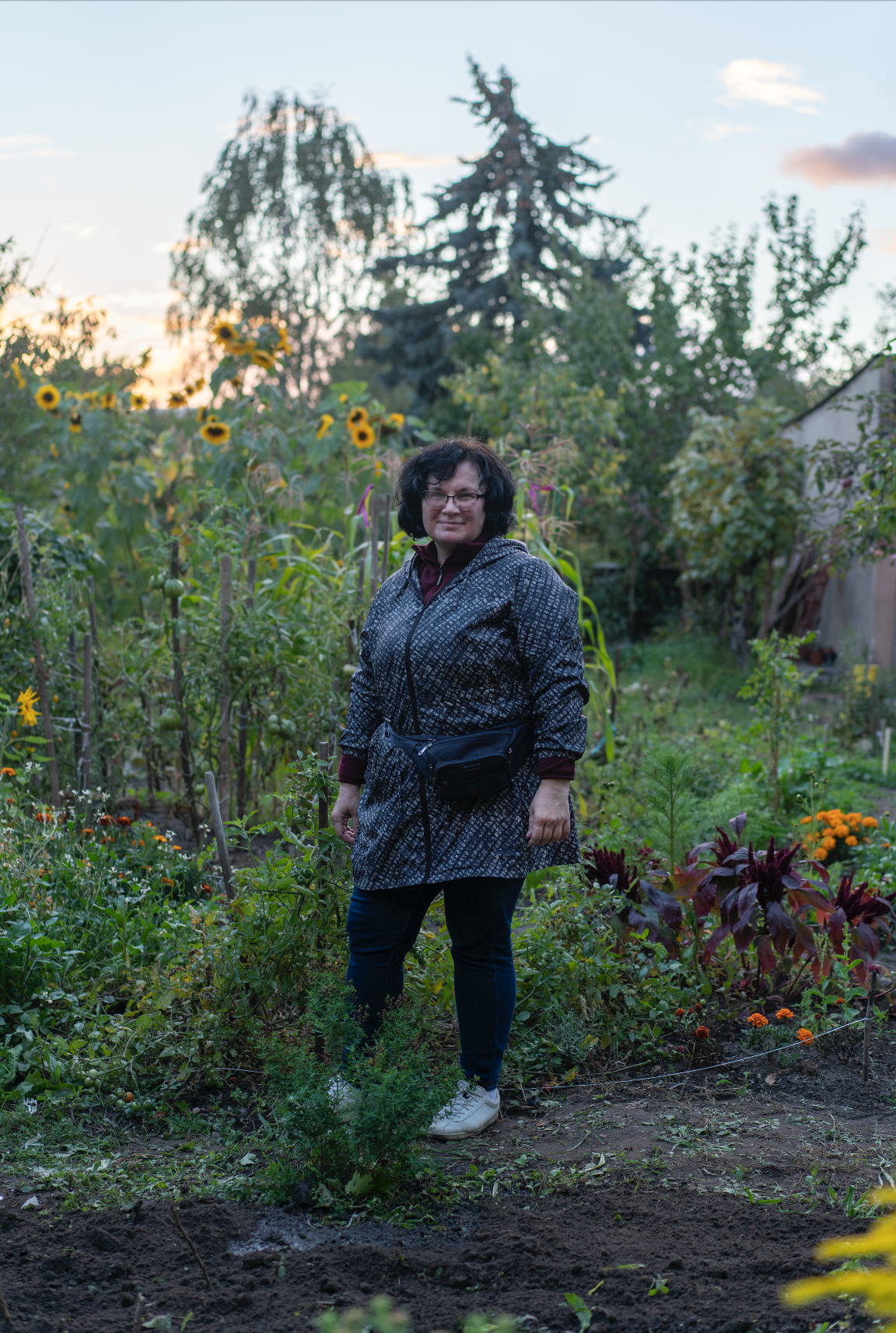
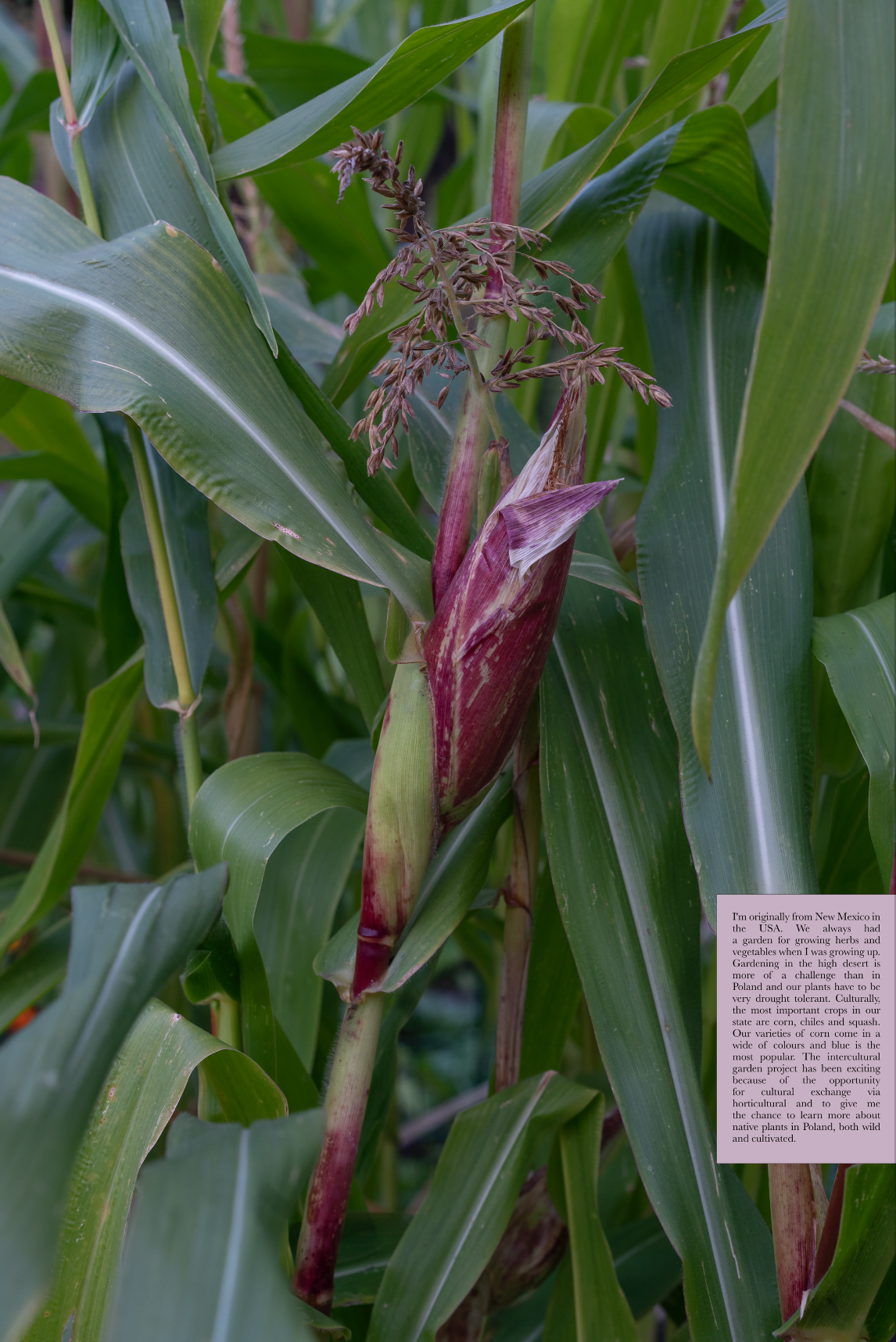
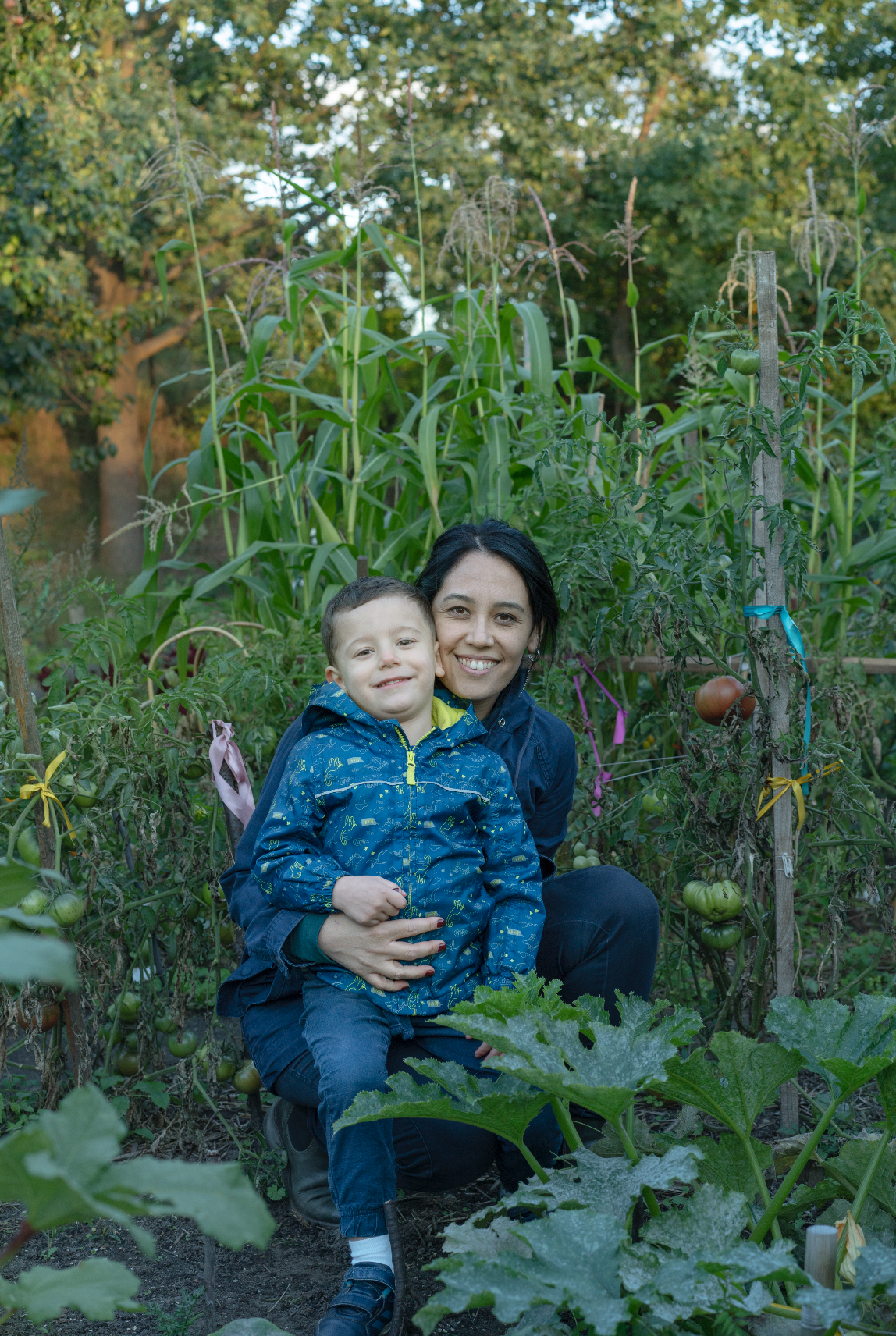
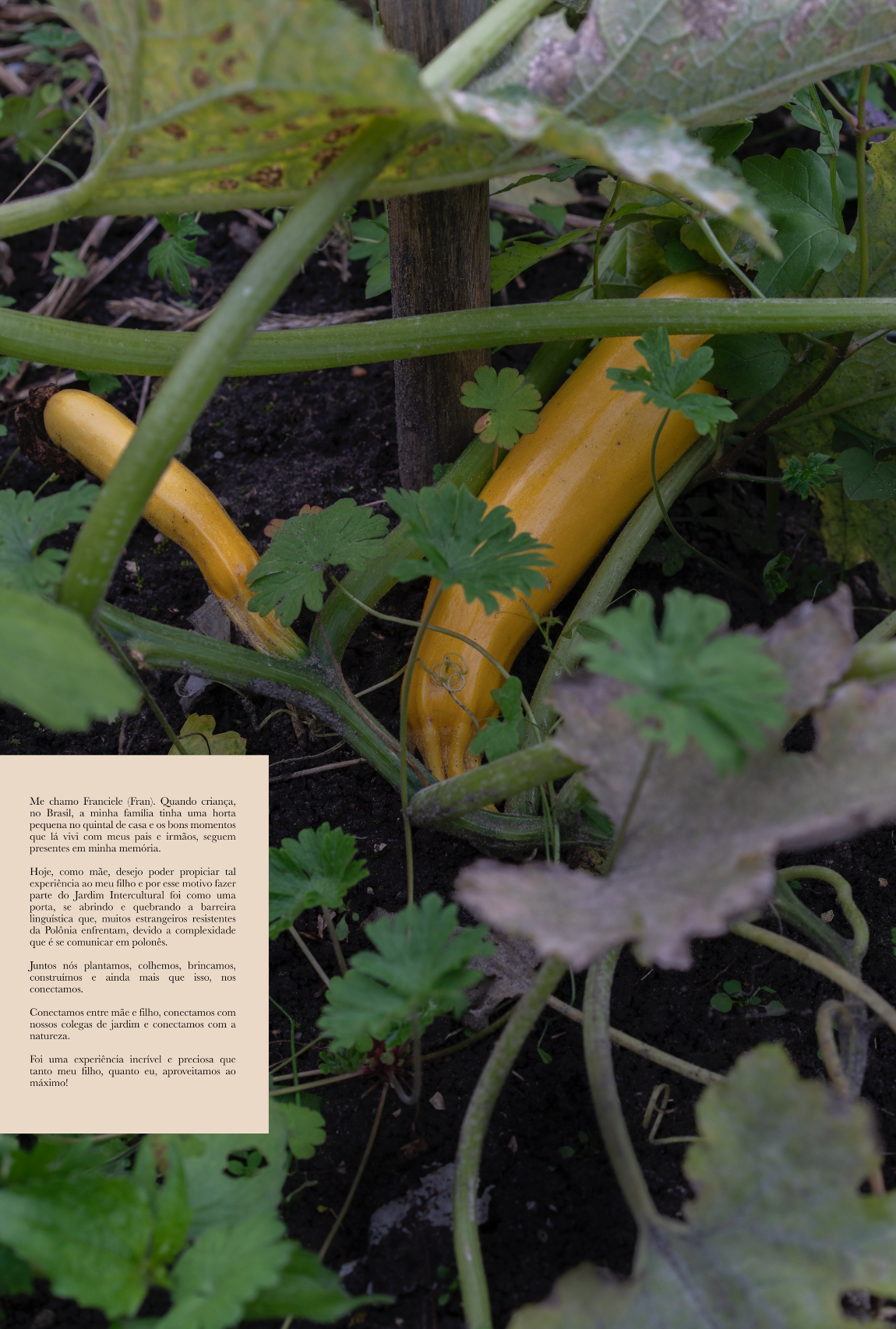
The third chapter presents the gardeners participating in the project through first-person narratives and photographs of selected plants that appear in their stories, introducing both human and non-human actors in this study.
The next chapter discusses how a garden—as a transnational space—accumulates experiences specific to different countries and continents. It analyzes how gardening practices that transcend borders and climatic zones help maintain relationships both between people and with plants left behind in their countries of origin.
The fifth chapter explores the memories evoked and „preserved” within the garden. By analyzing the stories of the gardeners, it examines the garden as a repository of memories and investigates how past gardening experiences shape the unique bonds between people and plants. The final chapter considers how these relationships influence gardeners’ well-being in the context of migration and refugeehood, while also highlighting how such initiatives contribute to sustainable development, particularly in light of drought risks in the region.
The thesis seeks to present the complex factors influencing the often challenging and exclusionary social situation of newcomers in the broader socio-political climate of Poland. Through interviews, participant observation, and literature analysis, the study conceptualizes intercultural gardens as transnational spaces for the exchange of experiences, connecting diverse gardening traditions from various countries and climates. It demonstrates how these experiences shape plant selection in allotment gardens and foster interactions between newcomers and the local Poznań community.
„This garden (…) is a rescue wheel. It shows me that I can make a new, fresh start in life; even though the war took me away from home, I can awaken something to life, and from a seed, it grows, blooms, and then moves to the next. That’s life, life, life. From small – big. And the cycle. And it’s very good to see life and not war. It is very good.” (2022)
– From the interview with the gardener, who fleed from Ukraine to Poland in 2022.